How-to
How to fit an e-bike conversion kit
Published
Note: This page contains affiliate links. If you buy through them we may earn a commission at no extra cost to you. Learn more
In short
Fitting a conversion kit means checking your frame and brakes suit it, then fitting the motor (a hub wheel or a mid-drive unit), mounting the battery, adding the pedal-assist sensor and brake cut-off levers, and routing the cables to the controller and display. A competent home mechanic can do it, but a bike mechanic should fit it or check your work, and the kit must stay within the 250 W and 15.5 mph EAPC limits.
Products for this job
Compare all 7 productsFEIMOKY HL-4813UK: 48 V 13 Ah, UKCA marked
Check price on AmazonAffiliate linkSDTYYP XH370-10J Silverfish: 36 V 15.6 Ah
Check price on AmazonAffiliate linkXiseny 36 V 14 Ah 504 Wh: F.lli Schiano fit
Check price on AmazonAffiliate link
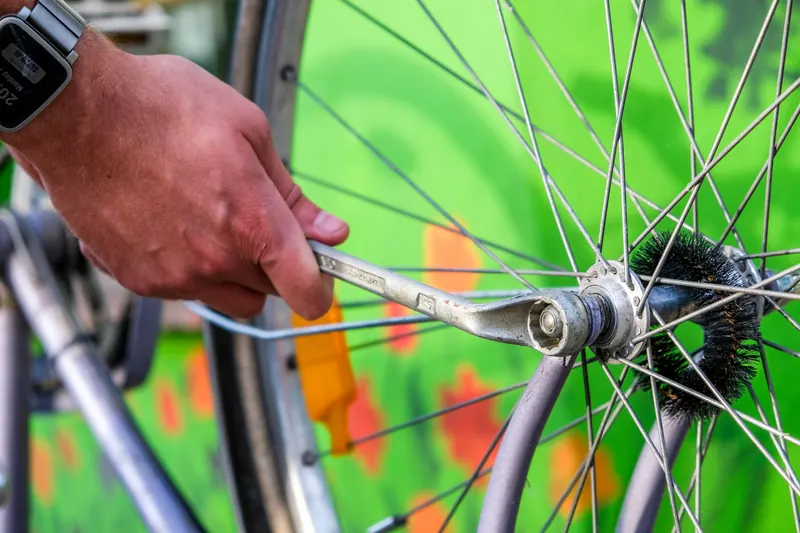
Conversion kits let you add a motor to a bike you already own. The basic idea is the same across most kits: a motor, a battery, a controller, sensors and a display, connected by a wiring loom. The details differ a lot between front hub, rear hub and mid-drive kits, so treat this as an overview and follow the kit maker's instructions closely. If you are not confident with brakes, gears and wheel fitting, a local bike mechanic can fit the kit for you, and many will check a self-fitted kit too.
Before you start: is your bike suitable?
Check these points before buying, not after. The kit maker usually lists the exact measurements it needs.
Our explainer on whether you can make a normal bike electric covers frames and bikes that are better left alone.
- Dropout width: the gap the wheel axle sits in, typically 100 mm at the front and 135 mm at the rear on many bikes.
- Fork material: steel or aluminium forks with secure dropouts; avoid carbon forks for front hub motors.
- Wheel size and brake type: the motor wheel must match your wheel size and brakes (rim or disc).
- Bottom bracket shell width and type, for mid-drive kits.
- Space on the frame or rack for the battery mount.
- Brakes in good condition, because the bike will be heavier and faster on average.
Tools and parts
You will need ordinary bike tools plus a few extras. A mid-drive kit needs bottom bracket and crank tools. Read the kit instructions for anything specific.
- 1Motor wheel or mid-drive unitFits: Front or rear dropouts, or the bottom bracket
- 2Battery with mountFits: Down tube bottle bosses or a rear rack
- 3ControllerFits: Battery mount or a frame bag
- 4Pedal-assist sensorFits: Behind the chainring, on the crank axle
- 5Brake levers with cut-offFits: Handlebar, in place of your levers
- 6DisplayFits: Handlebar, next to the stem
| Tool | Used for |
|---|---|
| Allen keys and spanners | Wheel nuts, battery mount, brackets |
| Tyre levers and pump | Moving the tyre and tube to the motor wheel |
| Crank puller and bottom bracket tool | Mid-drive kits and some pedal sensors |
| Cable ties and cutters | Tidy cable routing |
| Torque wrench | Tightening axle nuts and bolts to the stated values |
Step by step: fitting a hub motor kit
These steps describe a typical front or rear hub kit. Your kit's instructions take priority.
- 1
Remove the battery from the kit and keep it charged to a partial level, away from the work area.
- 2
Remove the old wheel and move the tyre, tube and disc rotor (if fitted) to the motor wheel.
- 3
Fit the motor wheel with the cable exit facing the way the instructions show, plus any torque arms supplied.
- 4
Tighten the axle nuts to the stated torque and check the wheel is centred and the brakes line up.
- 5
Fit the pedal-assist sensor at the bottom bracket and its magnet ring, or the torque sensor if supplied.
- 6
Swap the brake levers for the cut-off levers, then adjust and test both brakes carefully.
- 7
Mount the display and any controls on the handlebar.
- 8
Fit the battery mount and controller, then connect the loom plug by plug.
- 9
Route cables along the frame with ties, away from moving parts, with slack where the bars turn.
- 10
Check the controller is set to stop assist at 15.5 mph (25 km/h) and the wheel size is correct.
- 11
Fit the battery, power on and test at walking pace in a safe place before any road riding.
Fitting a mid-drive kit
A mid-drive motor replaces your bottom bracket and drives the chain. You remove the cranks and bottom bracket, slide the motor into the shell, secure it with its locking ring and bracket, then fit the kit's cranks and chainring. Chain line and chain length often need adjusting, and the extra force through the chain means a worn chain and cassette should be replaced.
Mid-drives use your gears, which helps on hills, but fitting is more involved. Our hub motor vs mid-drive guide compares the two.
Staying road legal and safe
Many kits sold online are offered in power and speed settings far above UK road limits. Only a kit with a motor rated at 250 W continuous, with assistance limited to 15.5 mph and no throttle above walking pace, keeps the bike an EAPC. Our guide to whether conversion kits are legal in the UK explains the details, and the UK e-bike law check tests any setup.
Charge the kit battery only with its supplied charger, while you are around and awake, and away from escape routes. If you are replacing a kit battery, our replacement battery guide explains what to match.
Note:To stay road legal in Great Britain, a converted bike must meet the EAPC rules: a motor with a continuous rated power of no more than 250 W, assistance that cuts out at 15.5 mph (25 km/h), and no throttle that works above walking pace. Kits sold as 1000 W or more, or set above 15.5 mph, make the bike a motor vehicle on roads. Brakes and wiring are safety-critical, so we recommend having a bike mechanic fit the kit or check your work.
Frequently asked questions
Can I install an e-bike conversion kit myself? Yes, if you are comfortable with wheels, brakes and cranks. Have a bike mechanic check the brakes, motor mounting and wiring before you ride on the road.
How long does it take to fit a conversion kit? A front hub kit can take a confident home mechanic an afternoon. Mid-drives and neat cable routing take longer.
Do I need torque arms with a hub motor? They are strongly advised with many hub motors, especially in aluminium dropouts, to stop the axle turning. Follow the kit maker's advice.
Where can I get a conversion kit fitted? Many independent bike shops fit kits. Ask whether they are familiar with your kit type before booking.
What you need
- Check price on AmazonAffiliate link
FEIMOKY HL-4813UK: 48 V 13 Ah, UKCA marked
- Check price on AmazonAffiliate link
Carpat GB1: EN 15194, Shimano hydraulic discs
- Check price on AmazonAffiliate link
Hiplok DX1000: Powered Cycle Diamond, 32 mm