Guide
What the EAPC plate on an e-bike must show
Published
Note: This page contains affiliate links. If you buy through them we may earn a commission at no extra cost to you. Learn more
In short
An e-bike that counts as an electrically assisted pedal cycle (EAPC) in Great Britain should carry a plate showing three things: the manufacturer, the motor's continuous rated power, and either the battery voltage or the maximum speed at which the motor assists. On a road-legal bike those figures will be 250 W or less and 15.5 mph (25 km/h) or less. The plate is usually fixed to the frame near the bottom bracket or on the down tube.
Products for this job
Compare all 5 productsCarpat GB1: EN 15194 certified, Shimano hydraulics
Check price on AmazonAffiliate linkSAMEBIKE XD26-II: 672 Wh, hydraulic brakes
Check price on AmazonAffiliate linkSAMEBIKE RS-A01MEN: 540 Wh, 50 Nm, 27.5 in
Check price on AmazonAffiliate link
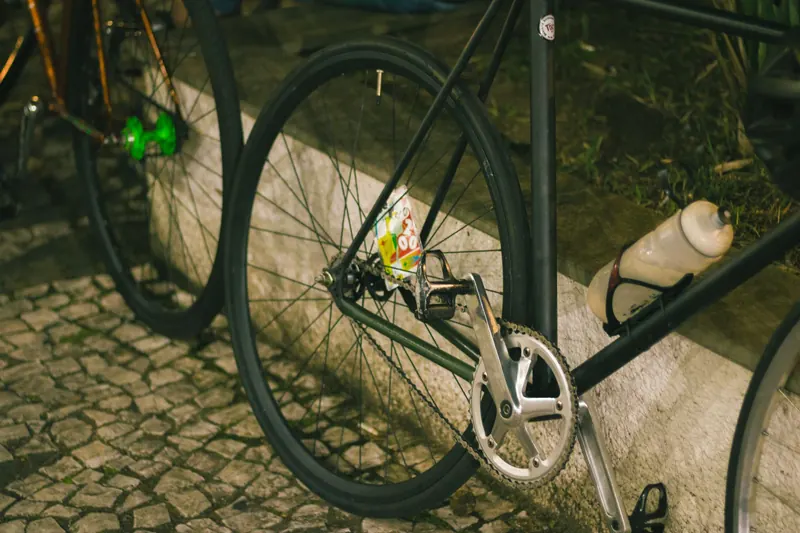
The EAPC plate is a small label that tells you, and anyone who checks, whether an e-bike is built to the UK rules. Many owners never notice theirs. If you are buying new or second-hand, converting a bike or simply want to be sure your bike is legal, the plate is the first thing to look at. This guide explains what it must show, where to find it, and what to do if it is missing. It is general information, not legal advice, so check gov.uk for the official wording.
The three details the plate must show
gov.uk lists the plate as one of the EAPC requirements. It must show the manufacturer, the power output and either the battery voltage or the maximum speed of the bike. In practice, the power output means the motor's continuous rated power, and the speed means the speed at which assistance cuts out.
| Detail | What a legal EAPC shows | Watch for |
|---|---|---|
| Manufacturer | The bike or motor maker's name | A blank or unbranded label |
| Continuous rated power | 250 W or less | 350 W, 500 W, 750 W or more |
| Battery voltage | Often 36 V or 48 V | Voltage alone does not decide legality |
| Maximum assisted speed | 15.5 mph or 25 km/h | Higher figures, or no figure at all |
Where to find the plate
On most factory-built e-bikes, the plate is a riveted metal tag or a tough sticker on the frame. Common places are the underside of the down tube near the bottom bracket, the seat tube just above the motor, or the chainstay. On mid-drive bikes it may sit near the motor housing. Some bikes carry the details on the motor itself, with a separate frame label.
Look closely in good light, because road dirt can cover the label. If you cannot find it, check the manual or the maker's website, which may show the plate's location for your model.
Reading the numbers correctly
The power figure on a plate should be the continuous rated power, not peak power. A motor rated at 250 W can briefly deliver more on a steep start, which is normal and does not make it illegal. A listing or plate that quotes only peak watts is not enough to judge the bike.
Voltage is just the battery's nominal voltage. A 48 V battery on a 250 W motor can be fully legal. If the plate shows voltage rather than speed, check the assist cut-off in the display settings or manual. Our 36 V vs 48 V guide explains why voltage does not set the legal limit.
Buying second-hand: plate checks
A plate is a useful check when buying used, but it is not proof the bike has not been modified. Derestriction dongles and changed display settings can lift the assist speed while the plate still says 25 km/h. Ask the seller whether the bike has been altered, check the speed limit in the settings menu if you can, and walk away if the seller seems keen on the bike being faster than it should be.
Also check the battery, charger and frame number. A stolen bike is a risk too, so ask for proof of purchase. A good lock helps keep your own bike yours; see our e-bike lock guide.
- 1
Find the plate and read the maker, power and voltage or speed.
- 2
Confirm the power is 250 W or less.
- 3
Check the display's speed limit setting is 25 km/h or 15.5 mph.
- 4
Ask whether any dongle or settings change has been made.
- 5
Ask for proof of purchase and the original charger.
Conversion kits and missing plates
Converted bikes rarely come with a plate. If you fit a 250 W kit and set it up within the rules, adding a durable plate or label with the kit maker's name, the rated power and the voltage or assist speed is a sensible step. Engraved metal plates fixed with rivets or strong adhesive last longer than paper labels. See are e-bike conversion kits legal in the UK for the full set-up checklist.
If a factory bike has lost its plate, contact the maker or the shop. They may be able to supply a replacement or confirm the details in writing.
Note:This page is general information, not legal advice. If you are unsure whether a bike meets the rules, check gov.uk before riding it on the road.
Frequently asked questions
Is it illegal to ride an e-bike without an EAPC plate? The plate is one of the listed EAPC requirements, so a bike without one may not meet the rules. Check gov.uk and fit a plate if needed.
What does 250 W on the plate mean? It is the motor's continuous rated power. It is the figure the UK rules use, not peak power.
Does the plate need to show 15.5 mph? It must show either the maximum assisted speed or the battery voltage, alongside the maker and the power.
Can I check a bike quickly? Yes. Use our UK e-bike law check with the figures from the plate and the settings menu.
What you need
- Check price on AmazonAffiliate link
Carpat GB1: EN 15194, Shimano hydraulic discs
- Check price on AmazonAffiliate link
Hiplok DX1000: Powered Cycle Diamond, 32 mm