Guide
What e-bike should I buy?
Published
Note: This page contains affiliate links. If you buy through them we may earn a commission at no extra cost to you. Learn more
In short
Start with your main journey, where you will store the bike and what terrain you ride. Commuting on roads and paths points to an electric hybrid. Trains, small flats or car boots point to a folding e-bike. Trails and bridleways point to an electric mountain bike. Carrying children or shopping points to a cargo bike or trailer. Then choose battery size by distance and check the bike meets UK EAPC rules.
Products for this job
Compare all 5 productsCarpat GB1: EN 15194 certified, Shimano hydraulics
Check price on AmazonAffiliate linkSAMEBIKE XD26-II: 672 Wh, hydraulic brakes
Check price on AmazonAffiliate linkSAMEBIKE RS-A01MEN: 540 Wh, 50 Nm, 27.5 in
Check price on AmazonAffiliate link
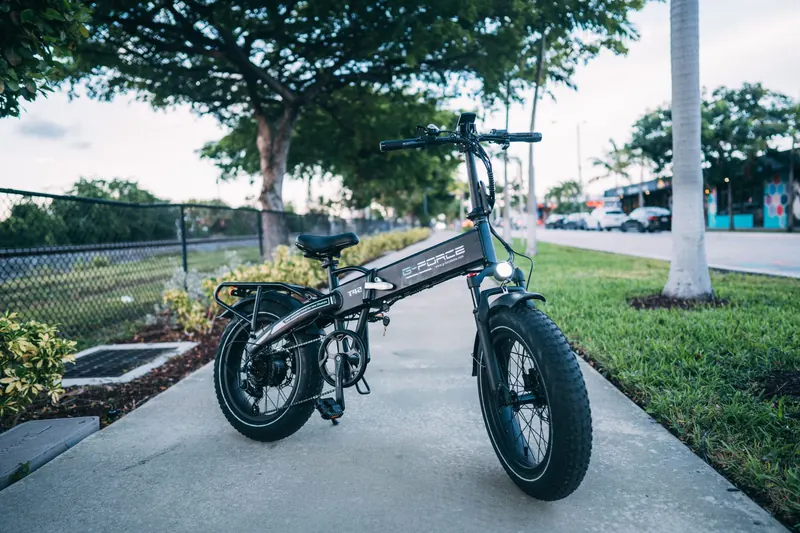
There are many types of e-bike, and the specifications can be confusing. The easiest way to choose is to ignore most of the numbers at first and think about how you will use the bike. Where will you ride, how far, and where will the bike live? Those three answers narrow the field quickly. This guide gives a simple decision path, explains the specifications that matter once you have a type in mind, and links to our buying guides for each kind of bike.
Step 1: match the bike to your main journey
Pick the row that best describes most of your riding. If two rows fit, choose the one that matches your most frequent trip.
CROSSBAR HYBRID
Dashed line: standover height
STEP-THROUGH
Dashed line: standover height
FOLDING 20 INCH
Dashed line: standover height
LONGTAIL CARGO
Dashed line: standover height
| Your main use | Type to look at | Guide |
|---|---|---|
| Commuting and town riding | Electric hybrid or city bike | Electric hybrid bikes |
| Train, bus or small flat | Folding e-bike | Folding electric bikes |
| Trails, bridleways, hilly countryside | Electric mountain bike | Electric mountain bikes |
| Long rides between charges | Trekking or long-range e-bike | Long range electric bikes |
| Children or shopping | Cargo e-bike or trailer | Bike trailers for e-bikes |
| Tight budget | Simpler hub-motor bikes | Budget electric bikes |
Step 2: think about storage and lifting
E-bikes are heavier than ordinary bikes, often around 20 kg or more. If you have stairs, a lift or a small hallway, weight and size matter as much as range. A folding e-bike or a lighter city bike may suit better than a bigger hybrid.
Also think about where you will charge. Fire services advise charging while you are home and awake, away from escape routes. If your bike lives in a shed, a removable battery you can bring indoors is useful.
Security matters too. A good lock is part of the cost of ownership; see our e-bike lock guide.
Step 3: choose the battery and motor
Battery size is measured in watt-hours. Multiply your longest regular ride in miles by about 20 to get a cautious Wh figure, then add some margin. Our battery size guide explains this.
Hub motors are simpler and common on city and budget bikes. Mid-drive motors use the gears and suit hills and off-road riding. Torque sensors give a more natural feel than cadence sensors. See our guides to hub vs mid-drive and torque vs cadence sensors.
Step 4: check it is road legal
To be ridden on UK roads without registration, insurance or a licence, an e-bike must meet the EAPC rules: a motor of no more than 250 W continuous rated power, assistance that stops at 15.5 mph, and no throttle above walking pace. Riders must be at least 14. Some bikes sold online exceed these limits; read listings carefully.
Our UK e-bike law explainer and the UK e-bike law check help you confirm a bike qualifies.
Where to buy and what support to expect
Where you buy matters almost as much as what you buy. A local bike shop can set the bike up, adjust the fit and handle servicing and warranty work. Buying online can widen the choice, but check who will service the bike, how warranty claims work and whether spare parts such as batteries, chargers and brake pads are easy to get in the UK.
Look for clear information on the motor's continuous rated power, the battery's Wh and the charger supplied. Listings that are vague about these, or that boast very high power or top speeds, are a warning sign. A bike that needs a lot of work to be road legal is rarely a bargain. Our budget e-bike guide focuses on bikes that meet UK rules out of the box.
Step 5: fit and features
Choose a frame size that suits your height and inside leg, and consider a step-through frame if getting on and off is a concern. Our e-bike size guide has a sizing table.
Then look at practical features: mudguards and a rack for commuting, integrated lights, hydraulic disc brakes for stopping power, and a display you find easy to read. Check the maximum load rating if you will carry heavy bags or a child seat.
Frequently asked questions
What is the best electric bike for a beginner? A step-through or low top tube hybrid with a modest battery and simple controls is easy to live with. Our guide on how to ride an e-bike covers the basics.
Should I buy a folding or full-size e-bike? Buy a folder if you need to carry it on trains or store it in a small space. Otherwise a full-size bike usually rides more comfortably.
Is a more powerful motor better? Road-legal e-bikes are limited to 250 W continuous rated power. Torque and sensor type affect how strong a bike feels on hills.
Can I buy an e-bike through the Cycle to Work scheme? Many employers offer the scheme, which can include e-bikes. Ask your employer how their scheme works.
What you need
- Check price on AmazonAffiliate link
Carpat GB1: EN 15194, Shimano hydraulic discs
- Check price on AmazonAffiliate link
SAMEBIKE LO26-II: folding 26 in, 21 gears